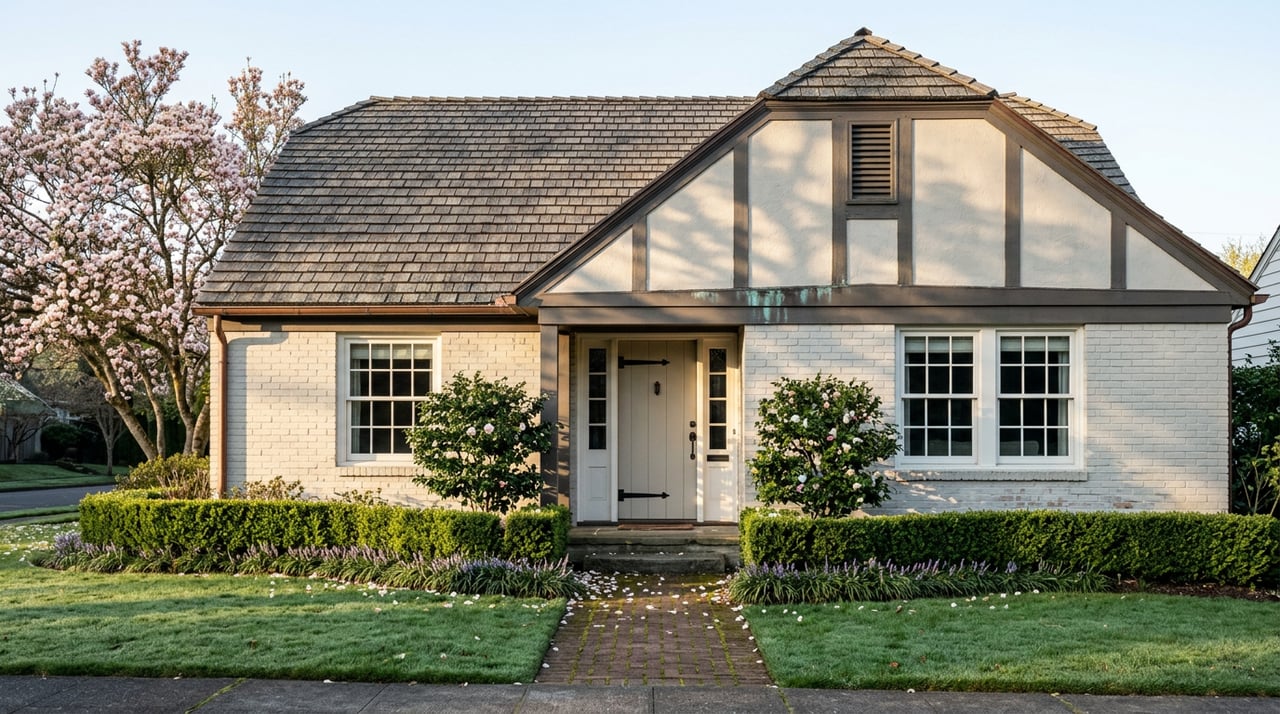
In January of this year, a more than century-old American Craftsman home on Peachtree Circle in Ansley Park was torn down. The house had stood since before Atlanta had zoning code as we know it. Its neighborhood has carried a National Register of Historic Places listing since 1979. And none of that stopped a bulldozer.
That single teardown set off a year of neighborhood meetings, a citizen petition, testimony before the Atlanta City Council Zoning Committee, and eventually a push to make Peachtree Circle its own single-street historic district. On September 8, the effort failed. The reporting on it from Rough Draft Atlanta made one line do a lot of work: the National Register listing "doesn't protect homes from being altered or demolished. Only a city historic district designation can do that."
If you're shopping for a home in Peachtree Park, that sentence should get your attention. Peachtree Park carries the same National Register status Ansley Park has carried since 1979, and buyers often read "historic neighborhood" on a listing and assume it comes with the kind of design protection that Atlanta's locally designated districts, places like Grant Park or Inman Park, actually have. It doesn't, and understanding why changes how you should think about renovation flexibility, teardown risk, and what your money buys here versus in a neighborhood with a different kind of historic status.
Two Systems, One Confusing Word
Atlanta buyers run into "historic" in two entirely separate legal contexts, and the overlap in language is where the confusion starts.
The first is the National Register of Historic Places, a federal program administered with state partners. Peachtree Park's oldest section was listed in 1986 under its original name, Peachtree Highlands. In 2008, the listing was expanded and re-filed as the Peachtree Highlands-Peachtree Park Historic District, covering architecture from 1921 to 1957. This designation is primarily an honor roll. It documents that a place matters historically and opens the door to certain tax incentives. It does not give any commission the authority to deny a permit, block a demolition, or require a homeowner to match a replacement window to the original.
The second system is local historic district designation, which is a City of Atlanta ordinance matter entirely separate from the federal list. Since 1989, the city has designated 18 neighborhoods this way, a group that includes long-settled districts such as Grant Park and Inman Park. Ansley Park, despite its 1979 National Register listing, has never successfully joined that list, which is exactly why the Peachtree Circle fight happened in the first place. In a locally designated district, exterior changes, from window replacement to additions to full demolition, require a Certificate of Appropriateness from the Atlanta Urban Design Commission before a building permit gets issued.
Peachtree Park has the first kind of status. It does not have the second.
What This Actually Means on the Ground
Here is the plain version. If you buy a cottage in Peachtree Park, you can replace the original windows with vinyl, add a second story, or tear the house down entirely, subject only to the city's ordinary zoning and building permit process. No design review board weighs in on whether your renovation fits the neighborhood's 1920s and 1930s character. That is a genuine freedom some buyers want. It is also the same freedom that let a Peachtree Circle owner raze a home that had survived a full century.
This cuts both ways for a Peachtree Park buyer.
If you want to renovate a Craftsman cottage on Highland Drive or Martina Drive without clearing every exterior decision through a city commission, that flexibility is a real selling point. You can move faster, spend less on design review cycles, and make changes a locally designated district would likely reject outright, like a contemporary addition or non-matching replacement windows.
If you're drawn to Peachtree Park specifically for its 1920s and 1930s character, that same flexibility means nothing stops a neighbor, or a future owner of the house next door, from replacing a period cottage with new construction that doesn't match. The Georgia Department of Natural Resources' own guidance on local historic districts notes that design review exists to encourage development that fits a district's character and to discourage changes that don't, a check that simply isn't part of the National Register system Peachtree Park operates under.
Neither of these is a reason to avoid Peachtree Park. It is a reason to understand exactly what you're buying into before you fall in love with the storybook cottages and assume the label on the sign protects them the way it might in a different Buckhead pocket.
The Tax Credit Rule Just Changed, and It Matters More Than the Design Question
For years, Georgia's state income tax credit for historic rehabilitation required a property to be listed on, or eligible for, the National or Georgia Register, either individually or as part of a historic district. That's the box Peachtree Park checks. A homeowner renovating a contributing property here could apply for the credit, which covers 25 percent of qualifying rehabilitation expenses, capped at $100,000 for owner-occupied residential properties, provided the work meets the Department of Community Affairs' Standards for Rehabilitation.
Starting in 2026, the program changed in a way that's worth knowing even if it doesn't touch Peachtree Park directly. The Historic Home Tax Credit now extends eligibility to properties that are locally designated or contributing to a local historic district, not just National Register properties. Applications opened October 1, 2025, and rehabilitation work under the new rule couldn't begin until January 1, 2026. Locally designated districts like Ansley Park's Peachtree Circle, had its designation succeeded, would have gained access to a credit path that previously required National Register status. For Peachtree Park, the practical takeaway is simpler: your National Register status already qualifies contributing homes here for this credit, on either the state or federal side depending on use, which is one of the few tangible financial upsides that comes with the label, separate from any question of design review.
What This Looks Like for a Buyer Right Now
Peachtree Park's National Register footprint runs across roughly 550 homes on thirteen streets bounded by Piedmont Road, Peachtree Road, the railroad and MARTA lines, and Georgia 400, a compact area residents and real estate listings alike describe as an island inside the city. That density and the neighborhood's mix of 1920s cottages, 1930s Cape Cods and Colonial Revivals, and postwar ranches built after World War II is part of what makes it distinctive from Buckhead's other historic pockets.
If you're comparing Peachtree Park to a neighborhood with true local historic district protection, the practical questions to ask before you write an offer are straightforward. Ask whether the specific home you're considering is a contributing structure to the 2008 district boundary, since that affects tax credit eligibility. Ask your renovation contractor whether they've worked on Standards for Rehabilitation compliance if you plan to seek the state credit, since that process runs through the Historic Preservation Division separately from your city building permit. And go in understanding that nothing in Peachtree Park's historic status will stop the house two doors down from becoming something entirely different in five years, for better or worse.
None of this makes Peachtree Park a riskier buy. It makes it a neighborhood where the historic label is doing less regulatory work and more tax-incentive work than most buyers assume, and where the character you see on a Sunday walk past the community garden and the pocket park on East Paces Ferry Road is preserved by the residents who choose to keep it that way, not by a commission with veto power.
A Few Direct Questions
Does Peachtree Park have a homeowners association that could function like design review? The neighborhood is represented by the Peachtree Park Civic Association, which organizes community events and green space programs. A civic association is not the same legal entity as a historic preservation commission and doesn't hold Certificate of Appropriateness authority.
Could Peachtree Park pursue local historic district status the way Ansley Park's Peachtree Circle did? Nothing in the current research points to an active push for that in Peachtree Park. The process, based on what played out in Ansley Park, requires sustained engagement with the city's Historic Preservation Studio, neighborhood planning unit review, and City Council approval, and even a single-street proposal took roughly a year and ultimately did not pass.
If I want the state tax credit for a renovation here, what's the first step? Confirm the home is a contributing structure within the Peachtree Highlands-Peachtree Park Historic District boundary, then work with the Georgia Department of Community Affairs' Historic Preservation Division before starting work, since rehabilitation completed before HPD review is still subject to the same Standards for Rehabilitation.
If you're weighing a cottage in Peachtree Park against a home in one of Buckhead's locally protected districts, the right comparison isn't which one is "more historic." It's which set of rules actually governs what you and your future neighbors can do to the block. Ashley Altenbach works this exact question with buyers across Buckhead and intown Atlanta every week, and can walk you through what a specific address in Peachtree Park is and isn't protected by before you write an offer.